Event Recap: Climate (In)justice: How Climate Change Affects Children’s Access to Justice
Event Title: Climate (In)justice: How Climate Change Affects Children’s Access to Justice
Date: October 10-11, 2024
Location: Brussels
Organisers: Child Friendly Justice European Network, Terre des hommes Foundation Lausanne, CICS.NOVA, and the Vrije Universiteit Brussel (VUB).
The recent CFJ-EN Annual Seminar 2024, co-organised by our partner Terre des hommes Lausanne Foundation, gathered a diverse group of experts and advocates to explore the urgent intersection of climate change and children’s rights. This two-day event focused on how environmental challenges significantly affect children’s access to justice, highlighting the voices and experiences of young activists.
This event sets the stage for the upcoming World Congress on Justice with Children in June 2025 and builds on key recommendations from Terre des Hommes’ 2023 report, "Climate In-justice for Children: How climate crisis affects access to justice and children’s rights."
General Assembly's Workshop
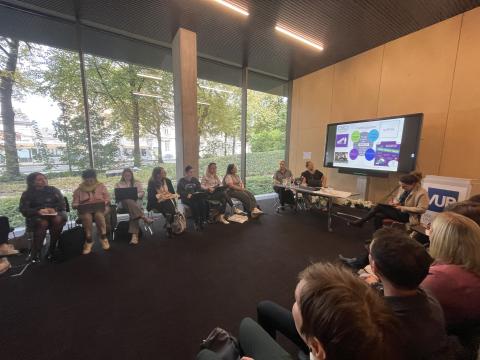
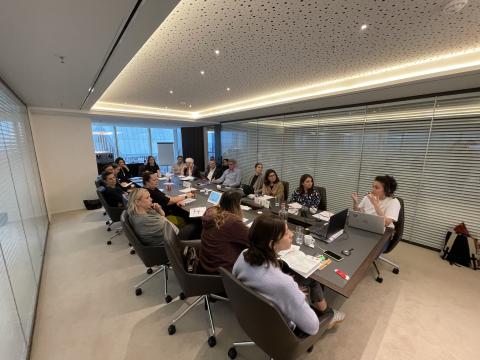
On 9th October, during the General Assembly of the Child Friendly Justice European Network, our team represented by Cédric Foussard, TDH and Idil Aydinoglu, PRI led a dynamic workshop on our project DATA MOSAIC. We engaged participants in lively discussions about leveraging data to enhance advocacy for children’s rights in the context of climate change. This interactive session sparked a collaborative exchange of ideas and strategies among attendees.
Opening Remarks
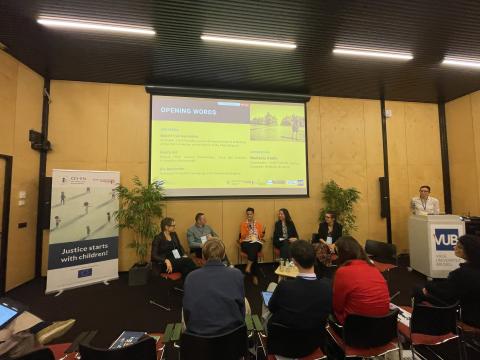
The annual seminar commenced with compelling opening remarks from Mariama Diallo, Coordinator of the Child Friendly Justice - European Network, and Benoît Van Keirsbilck, President of the Child Friendly Justice European Network and Member of the UN Committee on the Rights of the Child. They set a robust framework for the discussions that followed, with Marta Gil, Deputy Head of Justice Programmes at Terre des hommes Lausanne, highlighting the critical importance of collaboration in creating a brighter future for child justice systems and fighting climate change.
Key Discussions on Day One
The annual seminar featured dynamic conversations centred on the impact of climate change on children’s rights and their legitimacy in defending these rights. A standout moment came when children and young activists shared firsthand accounts of the challenges they face, emphasizing the urgent need to create supportive environments where they can assert their rights.
Workshop Session
On the second day, alongside experts on child justice—including Giulia Patane and Judit Geller- PILnet , Angela Vigil- Baker McKenzie, Fiona Dyer- Children & Young People's Center for Justice, JWC's coordinator Cedric Foussard facilitated a workshop titled Empowering Young Voices facilitated a workshop titled Empowering Young Voices: Advancing Child Justice in the Climate Crisis. This session provided a vital platform for young advocates to discuss their experiences and share strategies for navigating the complexities of climate change as they seek justice.
This workshop focused on the intersection of Climate Change and Child Justice Systems, integrating discussions on strategic litigation, freedom of association, and advocacy strategies, on improving data collection practices on violence against children (VAC).
Thematic Plenary
JWC's participation concluded with the Thematic Plenary #4: Embracing Children’s Diverse Profiles and Situations in Addressing Climate Justice. The session, moderated by Angela Vigil (Baker McKenzie) and Cedric Foussard (JWC), explored the profound impacts of climate change on vulnerable children.
Sophie Shields from the Institute for Inspiring Children’s Futures highlighted the disproportionate effects of climate change on children and their role as environmental human rights defenders. Astrid Podsiadlowski from the European Union Agency for Fundamental Rights presented data showing how vulnerable children are particularly affected by climate change, with serious implications for their rights.
Aysegul Sukran Öz from the Validity Foundation discussed how climate change exacerbates emotional, mental, and developmental vulnerabilities in children, advocating for recognition of their rights through the UNCRPD. Olivia Rope from Penal Reform International focused on the overlooked issue of protecting children in detention during natural disasters, calling for human rights-centred climate disaster planning.
Overall, the Climate (In)justice seminar was an invaluable opportunity for our team to actively participate and deepen our understanding of the critical link between climate change and children’s access to justice. Inspired by the young advocates, we remain committed to amplifying their voices in our ongoing efforts to support children’s rights within the climate justice framework.
It was a pleasure to work with the Child Friendly Justice Network, Mariama Diallo and her team, as well as CICS.NOVA, in the co-organization of this event over the last 10 months.