Insights from the UN High-Level Political Forum 2024 Official Side Event: Accelerating Progress to Achieve Justice for Children
Where Are Children in the International Agenda?
At the moment, the youth agenda is taking over the children's agenda on the global stage. It is crucial to remember that children are not just a subset of the youth; they have unique needs and rights that must be addressed independently. Children are not a marginalized group; they are rights holders entitled to specific protections due to their evolving maturity.
Globally, we are witnessing a troubling regression in children's rights, with human rights backlashes that often sideline the needs of children. This regression demands urgent advocacy to protect children's rights and promote access to justice for children. Therefore, we must unite in a multilateral effort, forging strong partnerships to ensure child-centred access to justice.
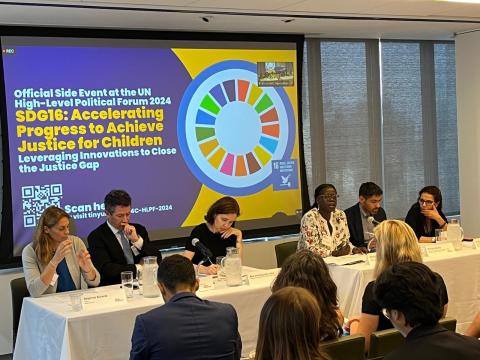
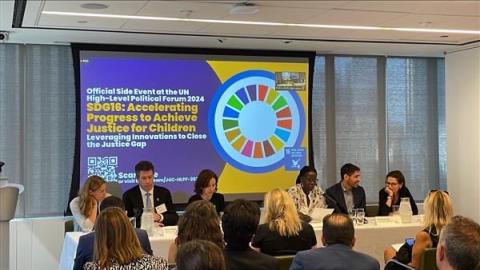
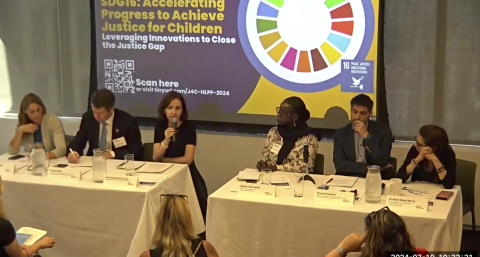
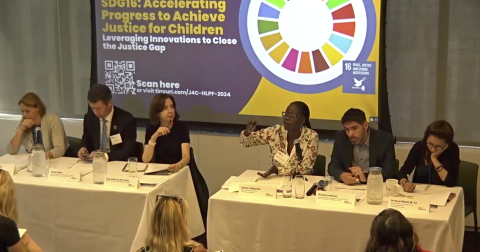
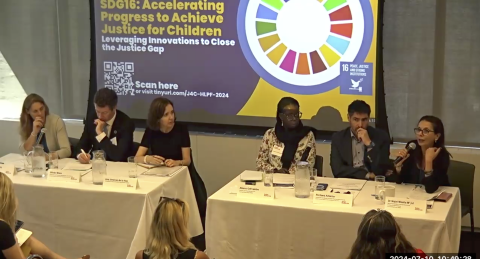
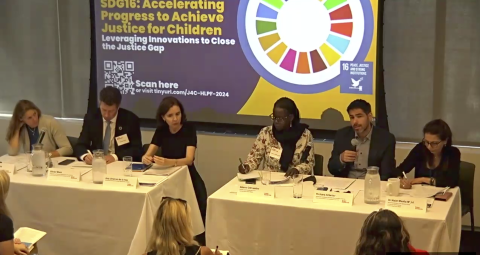
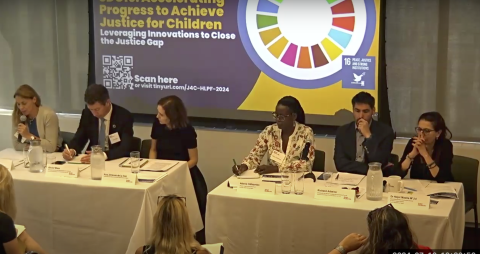
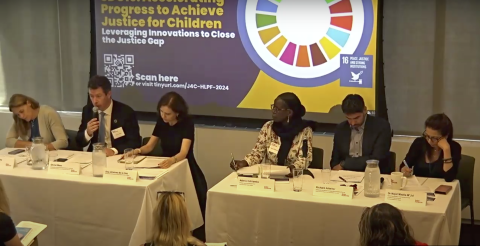
On July 10, 2024, the High-Level Political Forum (HLPF) hosted the Official Side Event titled “SDG16: Accelerating Progress to Achieve Justice for Children - Leveraging Insights to Close the Justice Gap.” The event, dedicated to advancing justice for children, saw robust participation and engagement, underscoring the global commitment to this critical issue. We extend our sincere gratitude to all attendees and stakeholders who contributed to this pivotal discussion. Below are the reflections and forthcoming actions inspired by the event.
Event Overview
The event was graciously sponsored by the Permanent Mission of Sierra Leone to the United Nations in New York, with co-sponsors including the Permanent Missions of Canada, Luxembourg, and Spain. It was meticulously organized by the SDG16+ Working Group on Justice for Children, led by the University of Strathclyde and the Global Initiative on Justice with Children by Terre des hommes, along with the NGO Panel on Children Deprived of Liberty, and hosted by the Baker & McKenzie New York Office.
Collaborative support came from various distinguished organizations such as the Child Friendly Justice European Network, Child Fund Alliance, Child Identity Protection, Defence for Children International, and others. The collective effort highlighted the shared dedication to driving forward the justice agenda for children.
Reflections from the Event
Opening Remarks
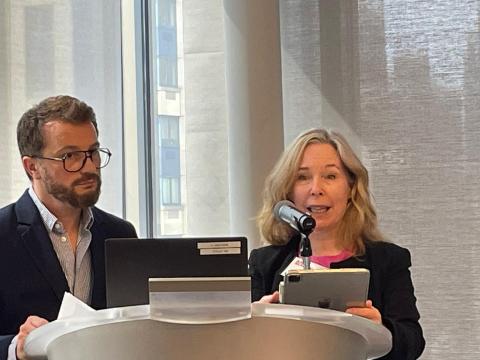
Event Moderators Professor Jennifer Davidson, Executive Director, Institute of Inspiring Children's Futures and Mr. Cédric Foussard, Coordinator of the Global Initiative on Justice With Children, Terre des hommes Lausanne Foundation set the stage by contextualizing the enormity of achieving SDG 16 for children across different levels. They emphasized the importance of child-focused justice reforms, calling them "Gamechangers" as these proposals aim to transform child-centered policies and address the significant global justice gap faced by children.
Key Messages:
- People-Centred Justice: A paradigm shift prioritizing people's experiences in justice reforms is underway. Children, however, remain particularly vulnerable and require urgent attention to ensure their justice needs are adequately represented and addressed.
- Child-Centred Adaptations: Incorporating children's voices in justice evidence and data is crucial. Ensuring fair access to justice for children, without discrimination, should be guaranteed at every level, whether they are victims, witnesses, or offenders.
- Multilateral Guidance: International cooperation can guide and inspire national and local child-centred justice reforms, reflecting children's lived realities.
Session Highlights
Session One: Hybrid High-Level Session - ‘Agenda 2030: The Role of Multilateralism to Achieve Justice for Children’
Moderated by Ms. Atieno Odhiambo, Director, Legal Empowerment Fund, this session explored the importance of multilateral leadership in achieving SDG 16 for children.
Key speakers included:
- Ms. Delphine Schantz, Director, UNODC New York: She highlighted the necessity of international cooperation and integrating children's voices into resolutions against violence.
- H.E. Mr. Olivier Maes, Ambassador and Permanent Representative of Luxembourg: He discussed Luxembourg's commitment to adapting justice systems to children's needs and the importance of child participation in policy.
- H.E. Ms. Ana Jiménez de la Hoz, Ambassador and Deputy Permanent Representative of Spain: She emphasized Spain's initiatives for accountability and justice, underscoring the importance of transparency in public policy evaluation. She also announced that Spain will host the 2025 World Congress on Justice with Children and highlighted Spain's role as a member of the National Advisory Committee. "You can count on our firm commitment to make this congress a success," she assured.
- H.E. Mr. Richard Arbeiter, Ambassador and Deputy Permanent Representative of Canada: He stressed equity in children’s rights and the role of Federal Child Rights Impact Assessments (CRIA) in policy design.
- Ms. Mary Beth Goodman, OECD Deputy Secretary General: She provided insights on the role of multilateralism in achieving child-centred justice reforms. (Video)
- Dr. Najat Maalla M’Jid, Special Representative of the UN Secretary-General on Violence Against Children: She reflected on the need for robust support systems and accountability to overcome barriers to justice for children.
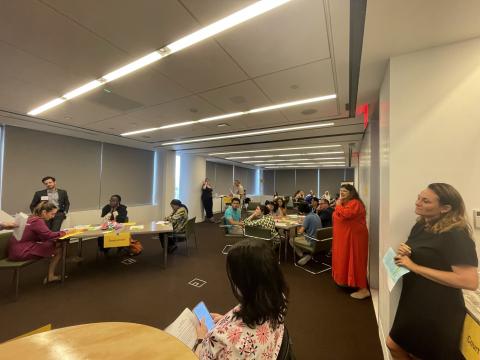
Session Two: Youth Experiential Learning Simulation - ‘In My Shoes’
Facilitated by Ms. Angela Vigil, Executive director Pro Bono Practice, Baker McKenzie and Mr. Brian Blalock, Senior Directing Attorney, Youth Law Center, this session offered participants an immersive experience into the challenges young people face in public systems. It aimed to foster empathy and inspire the development of solutions tailored to children, youth, and families. (Learn more)
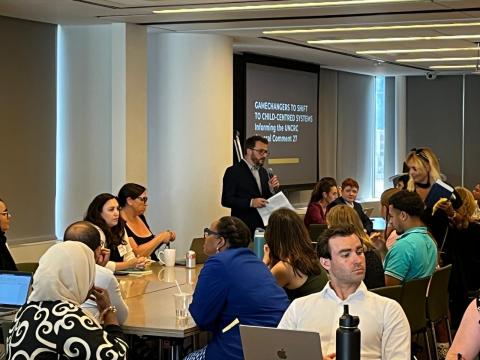
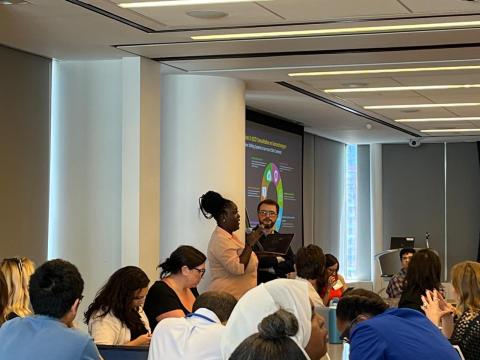
Session Three: Gamechangers to Shift to Child-Centred Systems
This session focused on identifying responses to common justice problems faced by children. Mr. Benoit Van Keirsbilck, Member of the UN Committee on the Rights of the Child, encouraged participants to identify essential common responses and share innovations for the Global Consultations on UNCRC General Comment 27, focusing on children’s rights to access justice and remedies (Video). Afterwards, participants collaborated in groups to share innovative child-centred justice interventions and reforms. These insights will contribute to the Global Consultation on the UNCRC General Comment 27 on children's rights to access to justice and remedies.
Next Steps
The insights and innovations gathered from the event will be compiled into a report to inform the development of evidence-based Gamechangers, informing UNCRC General Comment 27 on access to justice and remedies. This report will also influence the World Congress on Justice With Children leading up to 2030. Stay tuned for more updates as the consultations progress.
By leveraging the collective knowledge and commitment demonstrated at this event, we can accelerate progress towards achieving justice for children and close the justice gap by 2030.
Replay the UN HLPF SDG16 Official Side Event