Balancing innovation and child protection: the i-ACCESS conference marks the path for child-centric Artificial Intelligence
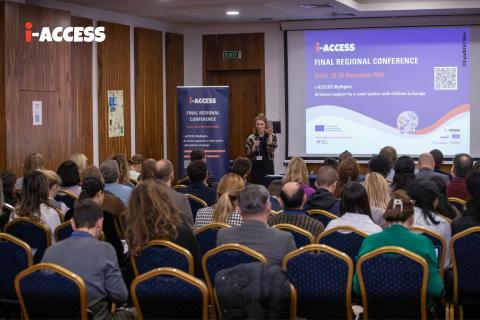
The i-ACCESS MyRights Final Conference held in Sofia, Bulgaria, from 28-29 November 2024, brought together global experts, policymakers, and child advocates to explore the intersection of artificial intelligence (AI), child protection, and access to justice. The event marked a significant milestone in promoting innovative, safe, and ethical AI applications tailored to children's rights and needs within justice systems.
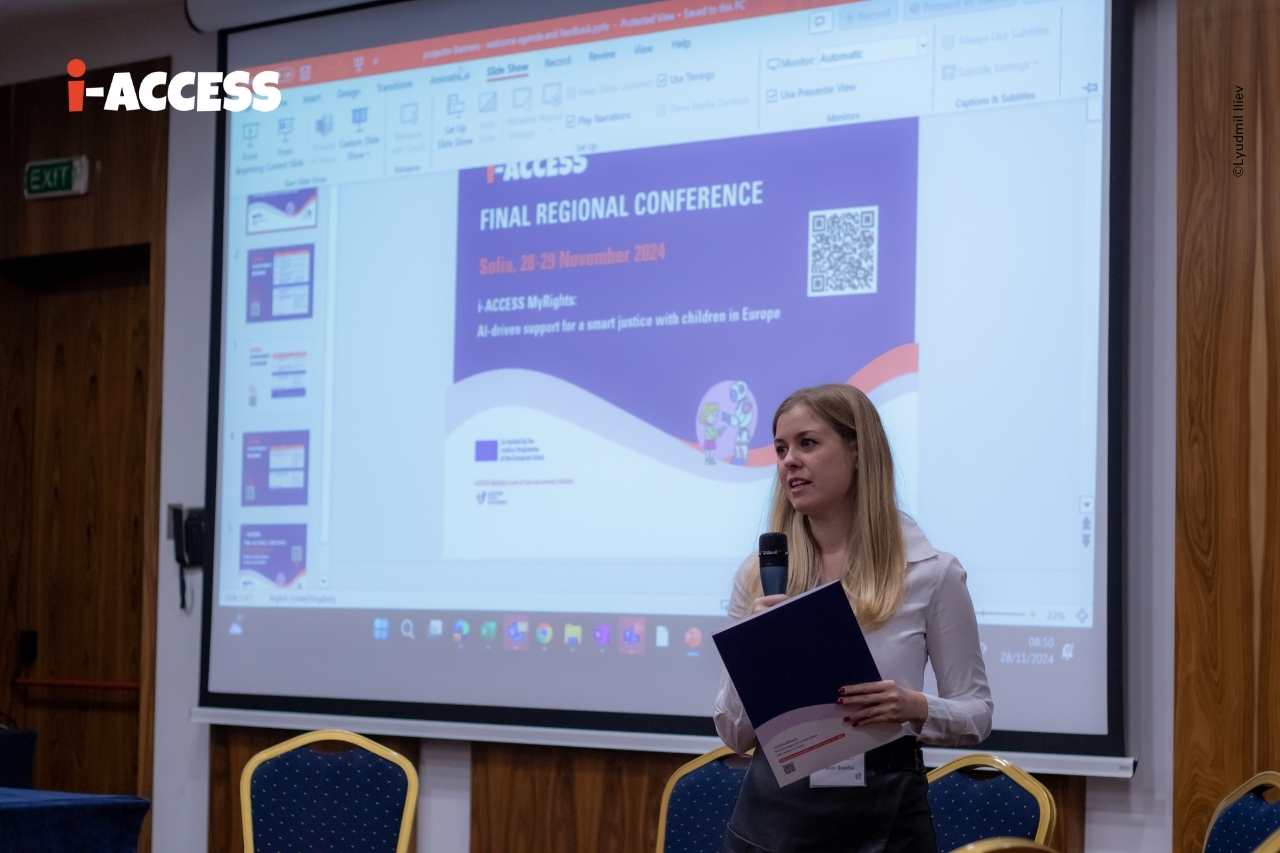
The conference opened with a warm welcome from Fanni Somfai of Terre des Hommes (Tdh) Hungary, i-ACCESS project officer, who stressed the project's commitment to inclusive, child-friendly, and ethical justice innovations.
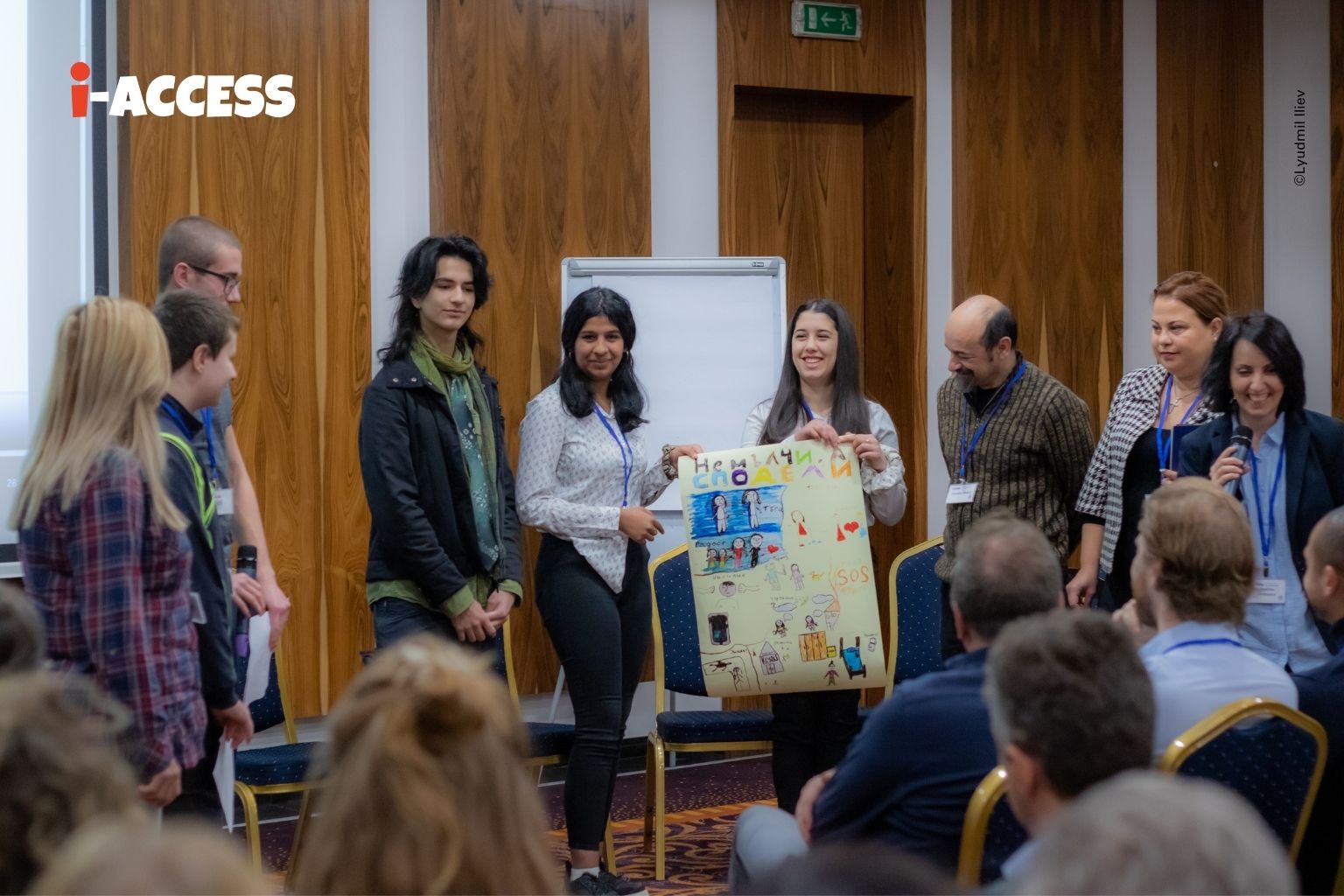
The guest stars of the event were the young members of the Bulgarian Child Advisory Board (CAB), who were consulted at every step of the project to ensure a truly child-centric approach, along with the CAB members in Romania and Greece, supported respectively by Terre des hommes Romania and Terre des hommes Greece.
With the support of facilitators and i-ACCESS partner SAPI, the children engaged the audience in a participatory game on meaningful child involvement, shared their reflections on what justice means to them,and showcased a video they created alongside their artwork. This session emphasised the necessity of involving children in shaping solutions that directly impact their futures, and it was a brilliant example on how powerful child engagement can be.
One of the conference's key moments was the presentation of the i-ACCESS chatbot. Designed as a reliable, child-friendly tool, the chatbot guides children through justice processes by providing clear, trustworthy information and detailing available support resources. The chatbot exemplifies how responsibly developed AI tools can significantly enhance children's access to justice. During her presentation on Children’s rights, privacy, AI and ethics requirements for the i-ACCESS chatbot, Victoria Hendrickx presented the measures undertaken to ensure the chatbot respects children's privacy, adheres to stringent ethical standards, and keeps the needs and protection of its young users at the forefront.
Balancing innovation in child justice systems with the imperative to safeguard children's rights emerged as a central theme throughout the event. Panellists and attendees underscored the necessity of strong collaboration among experts from various sectors, a cautious approach to adopting AI tools, and a firm commitment to inclusivity in both AI and judicial practices.
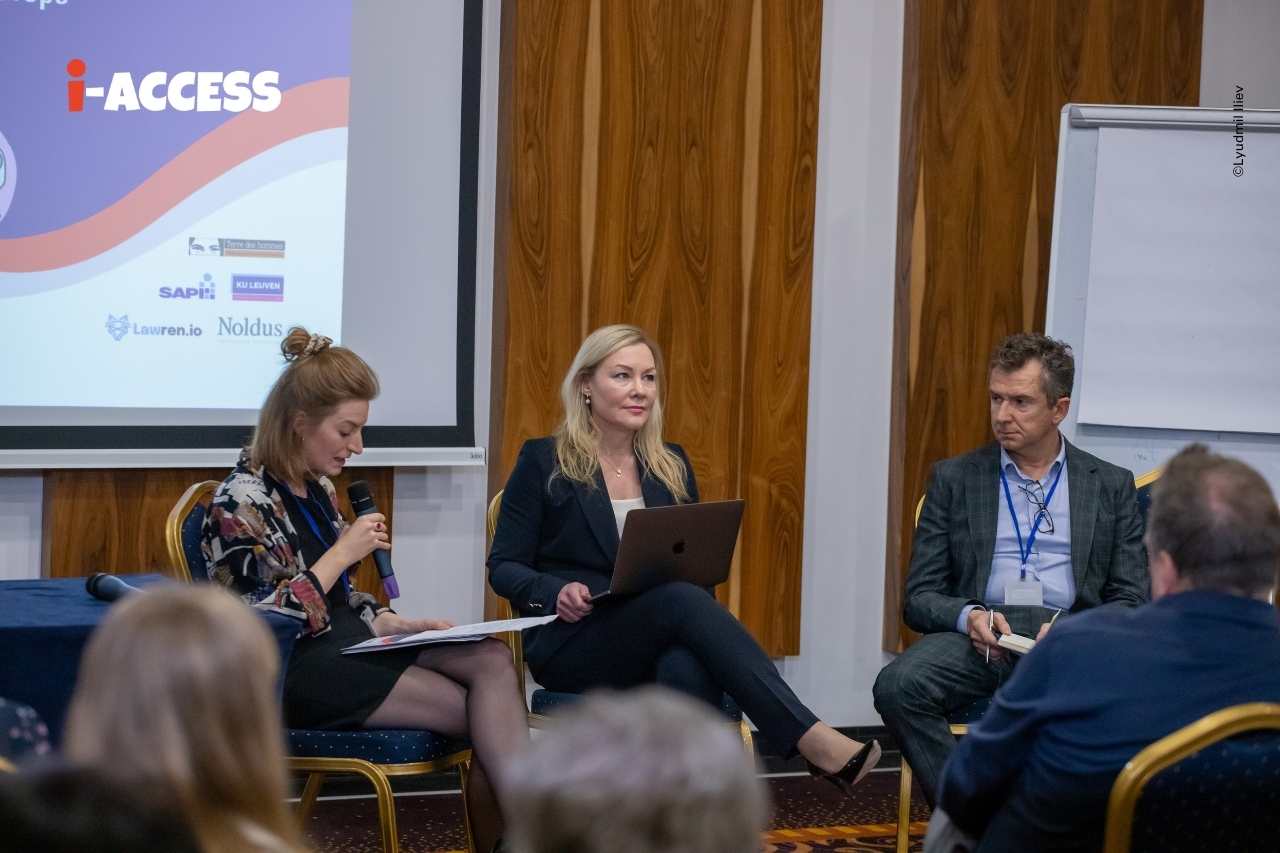
“Child justice systems and AI tools should be designed to serve the users: the children”, said Martin Gramatikov of HiiL, reinforcing the importance of user-centric design, especially when children are involved, during the panel discussion "Bridging the gap: enhancing justice system's capacity with AI-Driven solutions", moderated by Dóra Kiss (Terre des hommes Hungary)
“The i-ACCESS project showed that child-rights by design is possible.”, reiterated co-panelist Dr Wendy O’ Brien, UNODC officer.
There was particular emphasis on including diverse groups of children, such as minorities, LGBTI youth, and other marginalised communities, in both the development of AI tools and in court processes, to meet the unique needs of every child.
Panellists also stressed the value of integrating restorative justice practices, ensuring fairness and prioritising rehabilitation and healing over punitive measures. During the session "Human agency and the future AI designs in the justice system", Professor Theo Gavrielides noted how "Nobody thinks of prison when asked to visualize justice, and yet that is the usual outcome", calling for systematic alternatives to detention, especially when children are involved.
Another recurring theme was the role of businesses in safeguarding children's rights. John Carr, an independent child rights expert, highlighted the essential role of civil society in holding businesses accountable and ensuring that children's needs and opinions are considered at every stage of technological development. Dries Wijnen from Lawrene.io, another i-ACCESS partner, gave examples of what businesses can do to balance AI’s fast-growing development with responsible design.
The closing sessions explored AI's potential to transform legal systems. Esteemed panellists, including judges and legal experts, discussed the opportunities and limitations of AI in the justice sector.
Judge Mateja Durovic from the European Court of Human Rights stressed the importance of human oversight and robust ethical frameworks to ensure justice systems remain equitable and transparent. Judge Laura Andrei provided insights into the application of AI within the Romanian justice system, outlining safeguards to prevent misuse, while legal expert Péter Tóth provided a corporate perspective.
Watch the recording of this panel, "
The conference concluded with a panel discussion and a resounding call to action: prioritise the rights and needs of children at every stage of AI and justice system development. From designing inclusive solutions to ensuring business accountability, the collective expertise shared during these two days set a clear roadmap for meaningful progress.
We'll continue the conversation during our upcoming webinar "Ethical considerations of AI chatbots in child justice"on 18 December 2024.
Register here!
List of recorded sessions
- Bridging the gap: enhancing justice system's capacity with AI-Driven solutions, moderated by Dóra Kiss (Terre des hommes Hungary)
- Children’s rights, privacy, AI and ethics requirements for the i-ACCESS chatbot, by Victoria Hendrickx (KU Leuven, CiTiP)
- Human agency and the question of future AI designs in the justice system, moderated by Victoria Kaslik (Terre des hommes Hungary)
- Businesses' role in safeguarding children’s rights in AI development and deployment, by John Carr
- AI's transformative power in shaping the future of law, moderated by Panagiota Kanellopoulou (Terre des homme Greece)
i-ACCESS Myrights is implemented by Terre des hommes Regional Hub in Hungary, Terre des hommes Hellas, Terre des hommes Romania, Social Activities and Practice Institute in Bulgaria, Katholieke Universiteit Leuven in Belgium, Noldus in the Netherlands and Lawren.io in Belgium. It is co-funded by the Justice Programme of the European Union.