
I-ACCESS MY RIGHTS
The project

In Europe, child victims of crime face significant barriers in accessing simplified, child-friendly information about their rights during criminal proceedings. The i-ACCESS MyRights project is working to address this gap by leveraging Artificial Intelligence (AI) to create an innovative tool that help children to navigate complex legal processes.
The project aims to improve access to both information and legal assistance for child victims in the European Union. Through the development of a child-centric AI solution based on Natural Language Processing (NLP) technology, i-ACCESS MyRights will offer child victims accessible, age-appropriate information about their roles and rights in criminal proceedings. This tool will simplify legal terminology and explain legal processes, making justice systems more inclusive and easier for children to understand.
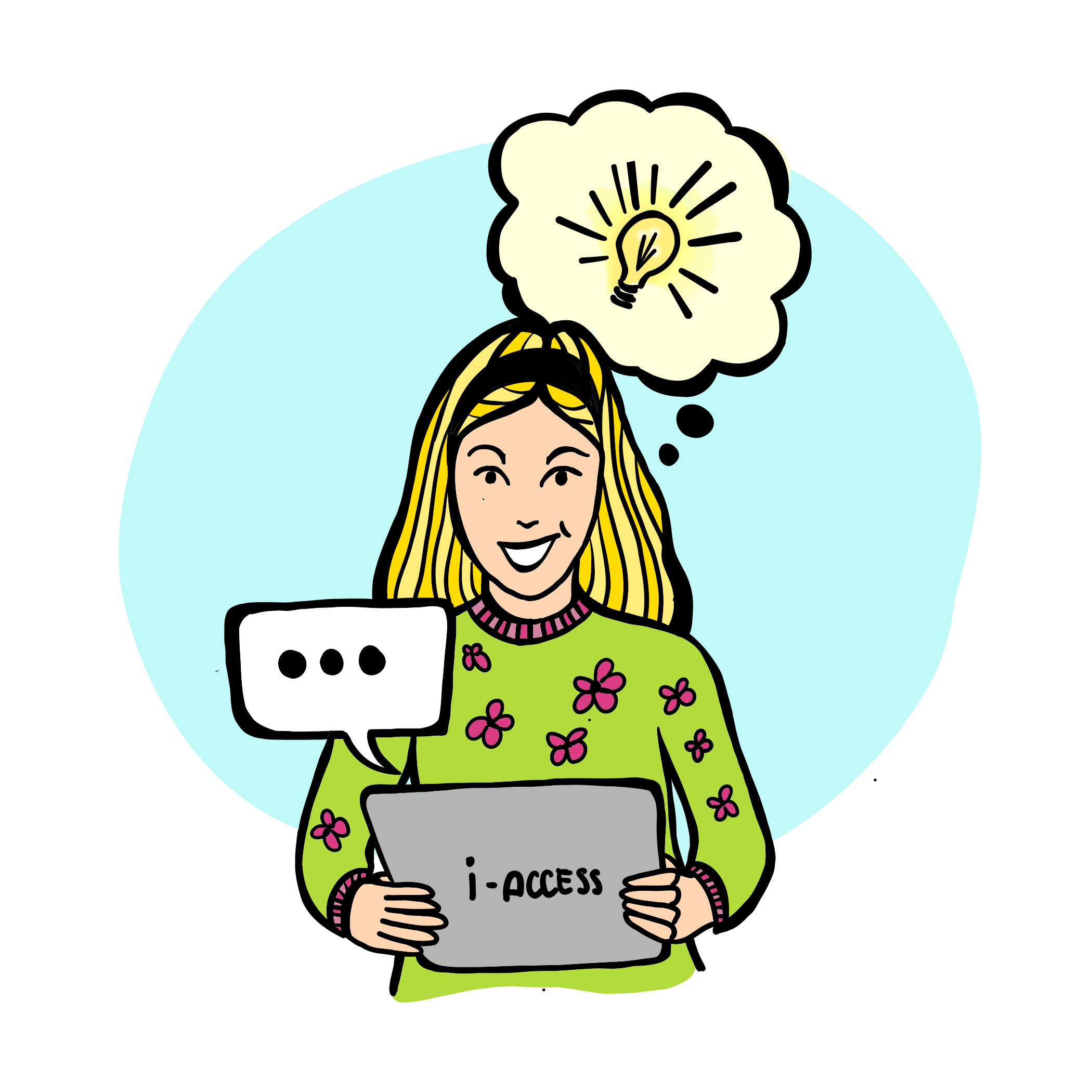 To ensure that our solutions are truly child-centric, we involved the most competent advisers about children’s needs: children themselves! Through the creation of Child Advisory Boards, children aged 14-18 will actively participate in shaping the tool at each step of its development, ensuring it addresses their specific concerns and improves their understanding of their rights.
The project is aimed at professionals, policymakers, and child victims aged 14-18 years, but also the public. It focuses on Greece, Bulgaria, and Romania and will also disseminate its results at the European level.
The i-ACCESS chatbot is a child-centred, multilingual chatbot that provides children, especially child victims, with age-appropriate legal information about their rights and the child justice systems.
The i-ACCESS chatbot will retrieve information from a robust library of official and reliable information to provide general legal aid to children in contact with the justice systems.
Its development started with consulting Child Advisory Boards to map children's needs, and the team of technical, legal and child protection experts, consults with children at every step of the development.
The i-ACCESS chatbot does not provide personalised legal assessment, to minimize the amount of children's personal data needed to answer their questions, and it makes it clear to children that they are not talking to a person.
Indeed, our main goal is always children’s safety and wellbeing, and the respect of their rights.
This is way the chatbot underwent rigorous risk assessment and relative mitigation strategies were put in place, as highlighted in our Legal and Ethical Framework.
Join the Final Conferenc
Key objectives and activities
The i-ACCESS MyRights project focuses on several key activities to ensure the success and child-friendliness of the tool:
- Research: Analyzing legislation, existing services, and similar tools available at national and European levels, the i-ACCESS project ensures the chatbot is relevant and legally sound.
- Ethics: An ethics committee ascertains compliance with EU and national regulations on personal data and child protection.
- Child Participation: Establishing a Children’s Advisory Board empowers children to actively participate, advocate for their rights, and become agents of change in the justice system.
- Co-design: Workshops and co-design session offers children and professionals an opportunity to collaboratively provide input on the chatbot’s design and functionality
- Training and Piloting: Delivering training sessions for both children and professionals guarantee proper use of the tool during its pilot phase, protecting children from potential harm.
- Dissemination and Awareness: Engaging policymakers, stakeholders, and the general public, we relentlessly advocate for a future (and a present) where AI tools are developed and used in a child-friendly manner, AI use in the justice system keeps children front and center at every step, as highlighted in our Policy Brief. To support non-expert in better understanding AI applications, potential and risks, we organize Webinars and published an AI Glossary for child justice professionals.
Where we work
The project primarily focuses on Greece, Bulgaria, and Romania, while disseminating findings and best practices across Europe to foster a more child-friendly justice system.
Project duration
The project will run from 2023 to 2025, creating lasting impacts on the way legal aid is provided to child victims across Europe.
Contact details
For more information on the project, please contact Fanni SOMFAI, i-ACCESS Project Manager, at [email protected]
Chatbot Guidance

At the bottom of the screen, you can find the i-ACCESS Chatbot! This chatbot is here to help you learn about your rights and the justice system in a simple and safe way. Before you start, please don’t forget to read the short guidance document available in English, Romanian, Bulgarian, and Greek. Enjoy exploring your rights and the justice system!
Partners and donors
The project is implemented by Terre des hommes Regional Hub in Hungary, Terre des hommes Hellas, Terre des hommes Romania, Social Activities and Practice Institute in Bulgaria, Katholieke Universiteit Leuven in Belgium, Noldus in the Netherlands and Lawren.io in Belgium.


i-ACCESS MyRights is co-funded by the Justice Programme of the European Union.

Frequently asked questions (FAQ)
- How will you ensure that the chatbot will provide accurate information?
The i-ACCESS chatbot will only learn from pre-selected and official documents, and not from the conversation with users or the internet. This ensures that all information it will provide comes from its robust library of verified legal information.
- Can the chatbot guide children through the entire legal process?
No, the chatbot is not meant to replace personalised legal counsel. While the chatbot provides general information, it does not offer step-by-step legal guidance for individual cases. It aims to inform children about their rights: think of it more like a librarian who can help you retrieve information, than a lawyer who can offer legal advice.
To protect children’s privacy, the chatbot is designed to minimize the collection of personal data. Hence, it does not provide personalised legal advice, which reduces the need for sensitive data and complies with strict data protection regulations.
- What makes the i-ACCESS chatbot child-friendly?
The chatbot is designed with input from children to ensure that the language, format, and user interface are accessible and engaging. It simplifies complex legal terms and breaks down the justice process in a way that children can easily understand. Through the Child Advisory Boards, children provide feedback on the tool’s design and content, and participate in design sessions and testing phases to ensure that the chatbot truly addresses their needs. The chatbot undergoes several rounds of testing, including pilot implementations where children and professionals will use the tool. Feedback from these pilots will be used to refine the chatbot, ensuring it is effective and user-friendly.
- How will the chatbot explain sensitive or traumatic legal issues to children?
The chatbot is designed to deliver information in a sensitive and age-appropriate manner, avoiding graphic details or triggering content. Child protection experts help guide this process to ensure that difficult topics are addressed with care.
- How can I be sure that the chatbot is safe and appropriate for children?
The chatbot is developed with strict adherence to child protection and data privacy standards. It is reviewed by legal and child protection professionals, to ensure the safety and appropriateness of its content.
The protection of children’s rights, privacy and safety has been the top priority at every step of development and in every technical decision. For instance, to guarantee children’s privacy, the chatbot will not store personal data or remember previous conversations. Also, to protect children from confusing the chatbot as a friend, the chatbot specifies that it is not human, and the number of questions that a child can ask is limited.
To share our findings and approach, we published the report “Legal and ethical framework, risk analysis and mitigation strategy”, which illustrates how we assessed and minimized risks to guarantee the chatbot’s safety and compliance with European laws and a legal study on the potential and limitations of AI chatbots to improve children’s access to justice, which explores the relationship between children’s rights, artificial intelligence chatbots, and access to justice and information.
- What technology is used in the i-ACCESS chatbot?
The i-ACCESS chatbot is built on Retrieval Augmented Generation (RAG) technology, which combines machine learning with information retrieval from a database of official, reliable sources. This ensures that the chatbot provides accurate and contextually relevant responses. We published an AI Glossary that explains the main concepts around Artificial Intelligence and how they apply to child justice and child protection.
- Where can I learn more about AI and its applications in child justice?
We are happy to help!
We published an AI Glossary that explains the general principles and concepts around Artificial Intelligence, and we have organised a webinar series where we discussed several aspects of the impact of AI on child justice with international experts.

Publications
Webinars


News